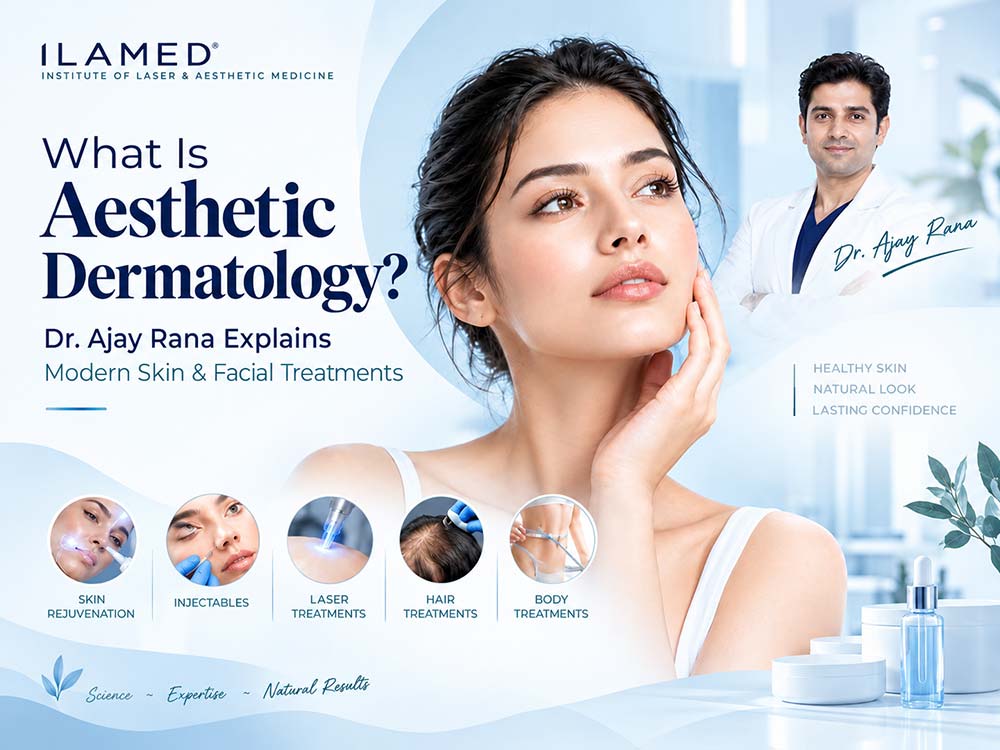
What Is Aesthetic Dermatology? Dr. Ajay Rana Explains Modern Skin & Facial Treatments
August 2, 2023
Aesthetic Medicine: A Complete Guide to Treatments, Safety and Results
What is Aesthetic Medicine?
I am Dr. Ajay Rana, and in this blog I want to explain aesthetic medicine in simple words. Aesthetic medicine is a branch of medicine that uses non-surgical and minimally invasive treatments to improve how your skin, face, hair and body look and feel. It should be performed only by trained doctors, usually dermatologists, plastic surgeons or aesthetic physicians, and, in my practice, the focus is always on natural-looking results with little or no downtime.
In India, interest has grown quickly. More people now want treatments for pigmentation, acne scars, early ageing and hair thinning, and they want them done safely, in a clinic, by a qualified doctor. In this blog, I explain what aesthetic medicine includes, who it suits, what to expect and how to choose a clinic.
Popular Aesthetic Treatments
Injectables
Botulinum toxin (Botox) softens frown lines, forehead lines and crow’s feet by relaxing the muscles underneath. Dermal fillers restore volume in the lips, cheeks, jawline and under-eye area. Skin boosters such as Profhilo and polynucleotides improve hydration and skin quality rather than shape.
Skin treatments
Chemical peels, microneedling, PRP and laser treatments are used for pigmentation, melasma, acne scars, open pores and dull skin. Melasma and scars often need a combination of treatments over several months.
Devices and skin tightening
Radiofrequency (RF) microneedling, HIFU and laser resurfacing target skin laxity and fine lines. Laser hair removal is also one of the most requested procedures.
Hair treatments
PRP, GFC and mesotherapy are used to support hair growth in thinning hair, and hair transplant is an option when loss is more advanced.
Body treatments
Fat reduction, cellulite and stretch mark treatments aim at body contouring, not weight loss. They work best for stubborn, localised areas.
Who Is a Good Candidate?
In my view, there is no single best age for aesthetic treatments; it depends on your concern, not your birth year. Adults in their 20s may start with skin quality and acne scar care, those in their 30s often add preventive treatments for early lines, and those in their 40s and beyond usually look for volume restoration and skin tightening.
I consider you a good candidate if you:
- Have a specific concern and realistic expectations
- Are in good general health
- Are willing to follow aftercare and come back for repeat sessions
I may delay or avoid treatments during pregnancy and breastfeeding, active skin infections, or certain medical conditions and medicines. Please always share your full medical history with your doctor.
Safety, Risks and Choosing the Right Doctor
I always remind people that aesthetic treatments are medical procedures, so safety depends mainly on who performs them and what products they use. Common side effects include redness, swelling and bruising, which usually settle within days. Less common risks include infection, uneven results, allergic reactions and, with fillers, blood vessel complications that need urgent care.
Before booking, I suggest you check these points:
- 1. Qualification: The treating doctor should be a registered dermatologist, plastic surgeon or trained aesthetic physician, not a salon technician.
- 2. Genuine products: Ask to see the sealed, branded product and its batch details.
- 3. Consultation first: A good clinic assesses your skin and history, explains options and risks, and says no when a treatment is unsuitable.
- 4. Hygiene and setup: The clinic should be clean, use single-use needles and have an emergency plan.
- 5. Realistic promises: Be careful of guaranteed results, heavy discounts or pressure to book packages on the spot.
Follow the aftercare instructions closely and contact the clinic if you notice severe pain, unusual swelling, colour change in the skin or fever.
Cost, Sessions and Downtime
Cost varies by city, clinic, doctor’s experience, product brand and the area treated, so a doctor can only quote a price after assessing you. Most skin and hair treatments need a course of sessions, while injectables need top-ups. The figures below are typical ranges and differ from person to person.