Aesthetic Medicine: A Complete Guide to Treatments, Safety and Results
October 16, 2026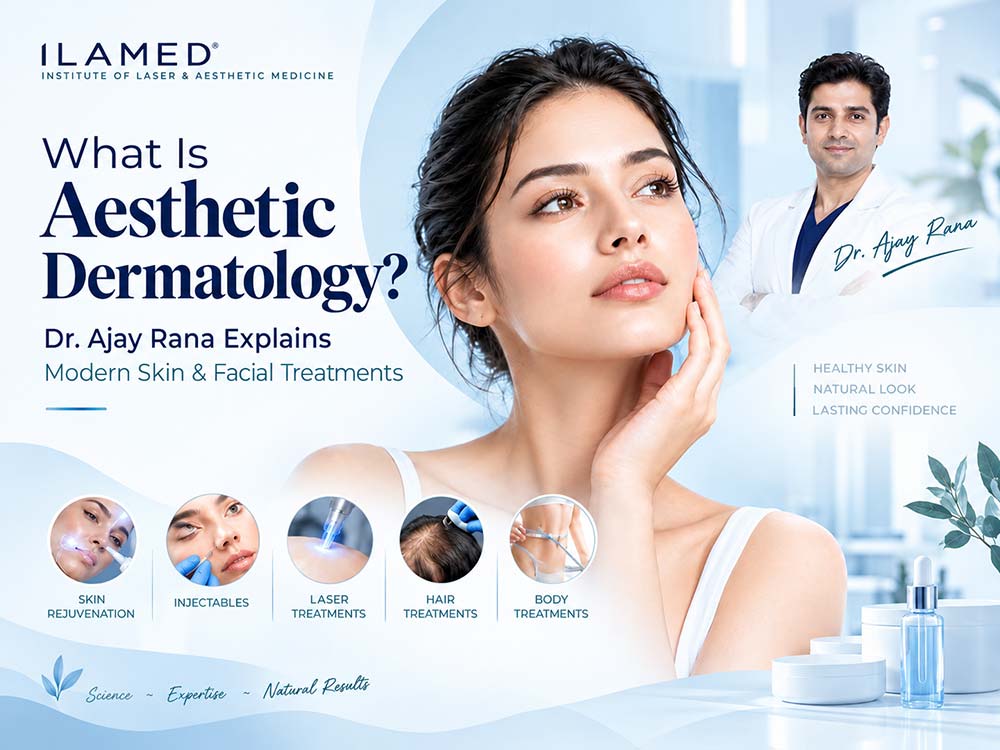
What Is Aesthetic Dermatology? Dr. Ajay Rana Explains Modern Skin & Facial Treatments
Many people hear the term "aesthetic dermatology" and assume it only means looking younger. In reality, it is a medical field built on skin science, safety, and measurable outcomes. In this guide, Dr. Ajay Rana explains what aesthetic dermatology is, which conditions it addresses, how modern skin and facial treatments work, and what to consider before choosing one.
What Is Aesthetic Dermatology?
Aesthetic dermatology is the branch of dermatology that focuses on improving the appearance, texture, tone, and overall health of the skin, hair, and nails using evidence-based procedures.
It combines medical knowledge of skin biology with modern technology such as lasers, energy-based devices, injectables, and advanced topical therapies. The goal is not to change who you are. It is to address specific skin concerns safely and to support natural-looking results.
Modern Skin & Facial Treatments Explained
1. Laser Treatments
Lasers deliver focused light energy to specific targets in the skin, such as pigment, blood vessels, or hair follicles. Depending on the device and settings, they are used for pigmentation, scar improvement, skin resurfacing, tattoo removal, and laser hair reduction.
Best for: pigmentation, scars, skin texture, unwanted hair.
2. Chemical Peels
A chemical peel applies a controlled solution that exfoliates the outer layers of the skin and encourages renewal. Peels range from superficial to deeper formulations, and the choice depends on your skin type and concern.
Best for: acne, uneven tone, dullness, mild pigmentation.
3. Microneedling and Radiofrequency Microneedling
Microneedling creates tiny, controlled channels in the skin to stimulate the body's natural collagen production. When combined with radiofrequency, it also delivers heat energy to deeper layers for added tightening and remodelling.
Best for: acne scars, texture, pores, mild skin laxity.
4. Botulinum Toxin (Anti-Wrinkle Injections)
Botulinum toxin temporarily relaxes specific facial muscles that cause expression lines such as frown lines, forehead lines, and crow's feet. When done with precision, it softens lines while preserving natural expression.
Best for: dynamic wrinkles in the upper face.
5. Dermal Fillers
Fillers restore volume, support facial structure, and soften deeper folds. The aim is balanced, proportionate enhancement rather than overfilling.
Best for: volume loss, facial contouring, lip definition, under-eye hollows (in suitable candidates).
6. PRP and Skin Boosters
Platelet-rich plasma (PRP) uses a concentrate from your own blood to support skin renewal, while skin boosters aim to improve hydration and skin quality from within.
Best for: dull, dehydrated, or tired-looking skin and early ageing.
7. Medical-Grade Facials and Skin Rejuvenation
Unlike a standard salon facial, medical-grade facials are tailored to skin condition and often combine cleansing, exfoliation, active ingredients, and device-based therapy under professional supervision.
Best for: maintenance, glow, congestion, preparing skin for advanced treatments.
Note: Treatment suitability varies from person to person. The right option depends on your skin type, concern, medical history, and expectations, which is why a proper consultation always comes first.
What Happens During an Aesthetic Dermatology Consultation?
A responsible consultation usually includes:
- Detailed history: skin concerns, medical history, medications, allergies, and previous treatments.
- Skin assessment: evaluating skin type, condition, and the underlying cause of the concern.
- Realistic goal-setting: discussing what can and cannot be achieved.
- A personalised plan: treatment options, number of sessions, downtime, and aftercare.
- Clear information on risks and expected results.
Be cautious of any clinic that recommends a treatment without examining your skin or that promises guaranteed or instant results.
How to Choose the Right Doctor?
A responsible consultation usually includes:
- Qualifications: look for a qualified dermatologist or a physician with recognised training in aesthetic medicine.
- Experience: ask how often the doctor performs the specific procedure you are considering.
- Technology and products: approved, genuine devices and products matter for safety.
- Transparency: a good doctor explains risks and limitations openly.
- Honest advice: the best clinicians will sometimes tell you that you don't need a treatment.
Myths About Aesthetic Dermatology
Myth 1: It is only for women
Skin concerns affect everyone. Men increasingly seek treatment for acne scars, pigmentation, and ageing signs.
Myth 2: It always looks "done" or unnatural
Unnatural results usually come from over treatment or poor technique, not from the field itself.
Myth 3: One treatment fixes everything
Most concerns need a staged plan combining treatments, sun protection, and a good home skincare routine.
Myth 4: Expensive means better
The right diagnosis and the right doctor matter more than the price of the procedure.
Myth 5: Treatments are risk-free
Every procedure carries potential risks. Choosing a qualified professional and following aftercare significantly reduces them.